Starting a toilet paper manufacturing business can be a promising opportunity, but for someone who has never worked in the tissue paper industry before, the first step is often the hardest.
What machine should you buy?
How is toilet paper produced?
How much factory space is needed?
What raw materials do you need?
How much does the equipment and transportation cost?
How many workers are required?
And most importantly, can the business make sense financially?
This South African customer came to Xingtu Machinery with exactly these questions.
He had no previous experience in toilet paper converting, but he was interested in entering the business. Instead of simply recommending a machine, our team worked with him through the different stages of planning, from understanding the production process and equipment requirements to calculating costs and preparing the machine for shipment.
Eventually, he selected an XT2200 semi-automatic toilet paper production line and started preparing his own toilet paper manufacturing business in South Africa.
This case shows how a beginner can approach a toilet paper business step by step.
1. Start by Understanding the Toilet Paper Production Process
For a beginner, purchasing a machine should not be the first question.
The first question should be:
How does toilet paper manufacturing actually work?
Our team first explained the basic converting process to the customer, including the role of jumbo tissue paper rolls, paper cores, rewinding, perforating, embossing, cutting and packaging.
Understanding the complete production process helped the customer determine what equipment was actually needed for his planned business instead of purchasing unnecessary machinery.
The basic process can be summarized as:
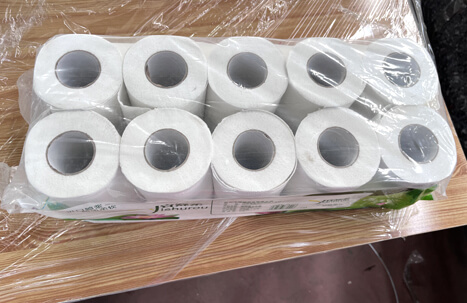
Jumbo Tissue Roll → Unwinding → Embossing & Perforating → Rewinding → Log Cutting → Roll Packing → Finished Toilet Paper
For someone entering the industry for the first time, understanding this process makes it much easier to communicate with a machinery supplier and evaluate different production solutions.
2. Determine What Machines You Actually Need
After understanding the production process, the next step was determining the appropriate equipment configuration.
Our team discussed the customer’s target products, expected production requirements and available investment, then explained the different machines required for a complete toilet paper converting line.
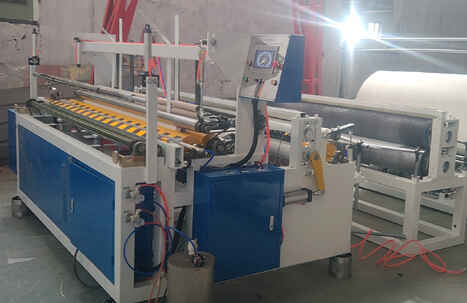
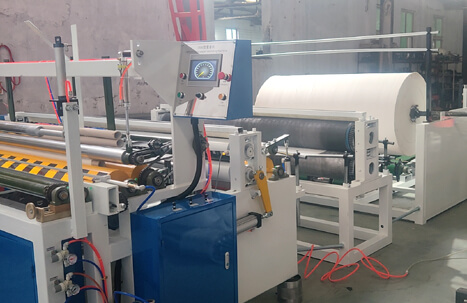
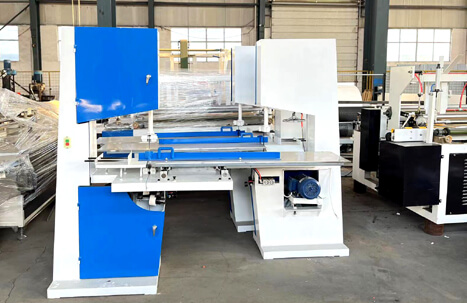
For this project, the customer finally selected the XT2200 semi-automatic toilet paper production line.
Main Equipment
XT2200 Automatic Toilet Paper Rewinding Machine
Manual Toilet Paper Roll Cutting Machine
Manual Toilet Paper Roll Packing Machine
Complete Air Compressor System
The exact equipment configuration should always be based on the customer’s target products, production requirements, factory conditions and investment plan.
3. Choosing Between 2-Ply and 3-Ply Toilet Paper
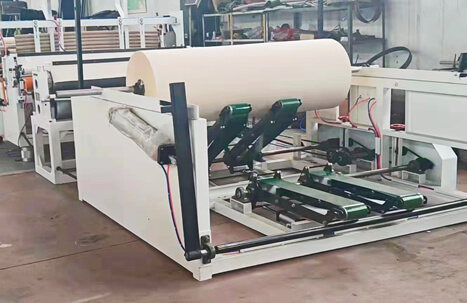
One of the important decisions in this project was the unwinding configuration.
The customer chose a two-ply unwinding stand, allowing the production line to produce both 1-ply and 2-ply toilet paper.
This was an important consideration because 2-ply toilet paper is currently more popular in the customer’s local market.
Instead of limiting the production line to only one product specification, the two-ply configuration gives the customer greater flexibility.
He can produce:
1-ply toilet paper
2-ply toilet paper
according to product requirements and market demand.
For a new business, this kind of flexibility can be useful when testing different products and responding to changes in the local market.
4. Calculate the Investment Before Buying the Machine
Buying a toilet paper machine is only one part of the investment.
Before placing the order, the customer needed to understand the overall cost of starting the business.
Our team communicated with him about:
Machine purchasing cost
Transportation cost
Shipping arrangements
Raw material requirements
Jumbo tissue paper rolls
Paper cores
Factory space requirements
Labor requirements
Electricity consumption
Production capacity
Operating costs
Estimated input and output
We helped the customer look at the project as a complete production business rather than simply looking at the price of one machine.
This is especially important for beginners.
A machine may have a suitable price, but the total project investment also includes factory preparation, raw materials, transportation, electricity, labor and other operating expenses.
Understanding these costs before purchasing helps a new investor make a more practical business decision.
5. Understand Raw Materials and How to Purchase Them
A toilet paper machine cannot operate without suitable raw materials.
For a beginner, another common question is:
Where do I get the raw materials?
We explained the main raw materials required for toilet paper converting, including:
Jumbo tissue paper rolls
Paper cores
Packaging materials
The customer also received guidance on how these materials are used in the production process and what should be considered when purchasing them.
This type of information is particularly useful for first-time investors because a successful toilet paper business requires not only the right machine, but also a stable source of suitable raw materials.
6. Plan the Factory Before the Machine Arrives
Factory space is another important part of the preparation.
The customer needed to consider where the production line would be installed, where raw materials would be stored and how finished toilet paper would be handled.
Our team discussed the required factory space and the basic production layout with the customer.
For a new investor, planning the factory before purchasing the equipment can help avoid problems after the machine arrives.
The production area should allow enough space for:
Machine installation
Operator movement
Raw material storage
Finished product storage
Material handling
Packaging operations
7. Xingtu Support Throughout the Project
For this South African customer, our work did not stop at recommending an XT2200 machine.
Because the customer was new to the toilet paper business, he needed support at almost every stage of the project.
Our team communicated with him about the details of the project, including the production process, required machinery, machine and transportation costs, raw materials, purchasing methods, factory space, labor, electricity consumption and input-output calculations.
During the project, we provided support including:
Before the Order
Production process consultation
Machine configuration
Equipment cost information
Transportation cost estimation
Raw material guidance
Factory space planning
Labor and electricity considerations
Input and output calculation
During Machine Production
Video factory inspection
Production progress reports
Regular communication
Machine testing videos
Technical confirmation before shipment
During Shipment
Shipment booking
Machine packing
Container loading
Shipping documentation
Customs clearance documents
Customs clearance support
After Shipment
Installation guidance
Technical support
After-sales service
For an international machinery purchase, these details can make a major difference, especially for a customer entering the industry for the first time.
8. Quality, Price and After-Sales Service Matter Most
From our experience, customers usually pay close attention to three major factors when purchasing machinery:
Product quality.
Price.
After-sales service.
These three factors are closely connected.
A competitive price is important, but a lower machine price does not necessarily mean a better investment if the equipment cannot meet the production requirements.
Machine quality is important because the equipment will become part of the customer’s daily production operation.
After-sales service is equally important because international customers may need technical support during installation, commissioning and future operation.
For this reason, we believe that supplying a machine is only part of our responsibility.
Our goal is to help customers understand the project before purchasing, receive the equipment smoothly and get the support they need after the machine arrives.
9. Machine Testing Before Shipment
Before shipment, the XT2200 production line was produced and tested at the Xingtu factory.
The customer received machine testing videos so he could see the equipment operating before it was shipped.
This allowed the customer to confirm the machine’s working condition remotely without needing to travel to China for the final inspection.
For international machinery projects, remote inspection and testing videos can provide customers with additional confidence before shipment.
10. From Xingtu Factory to South Africa
After production and testing were completed, the XT2200 semi-automatic toilet paper production line was prepared for shipment.
The complete production line was loaded into one 20-foot container and shipped to South Africa.
Instead of repeating the detailed shipment information here, you can see the complete packing and container-loading process in our News article:
→ [XT2200 Semi-Automatic Toilet Paper Production Line Delivered to South Africa]
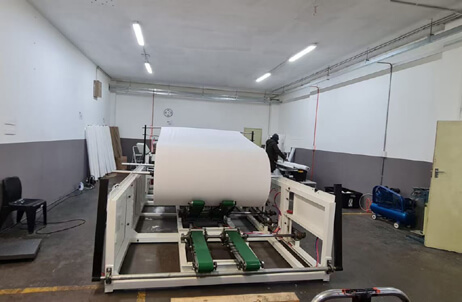
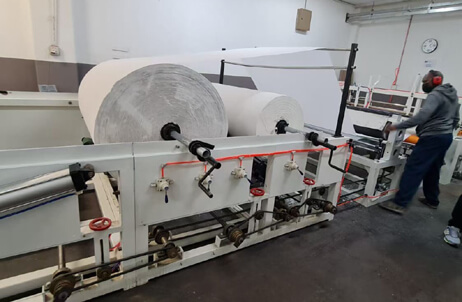
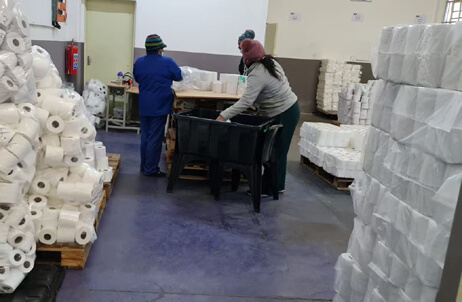
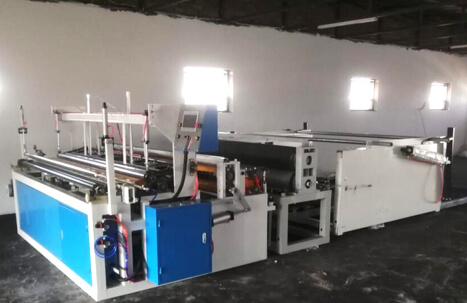
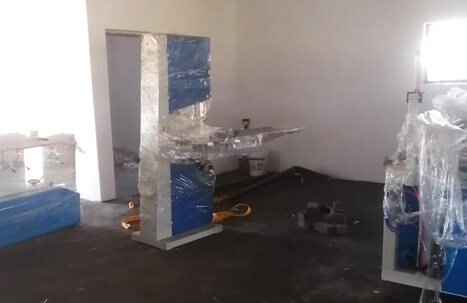
11. The Customer’s Toilet Paper Factory in South Africa
After the equipment arrived in South Africa, the customer’s factory became the final destination of this project.
For a new investor, seeing a real factory is often more useful than simply looking at machine specifications.
The following photos can show the customer’s factory, machine installation and production environment.
What Can Beginners Learn from This Project?
Starting a toilet paper business does not have to begin with knowing everything about the industry.
A better approach is to understand the project step by step:
1. Understand the production process
Learn how jumbo tissue paper is converted into finished toilet paper rolls.
2. Determine your target products
Decide whether you want to produce 1-ply, 2-ply or 3-ply.
3. Choose the right machine configuration
Select equipment according to your product requirements, production capacity and budget.
4. Calculate the complete investment
Consider machines, transportation, raw materials, factory, labor, electricity and other operating costs.
5. Prepare the factory
Plan sufficient space for production, storage and material handling.
6. Test the machine before shipment
Confirm that the equipment is properly produced and tested before it leaves the factory.
7. Prepare for installation and production
Make sure the factory, raw materials and operators are ready when the equipment arrives.
The South African customer’s project followed this basic approach and eventually resulted in the purchase and shipment of an XT2200 semi-automatic toilet paper production line.
Start Your Toilet Paper Business with the Right Plan
If you are thinking about starting a toilet paper manufacturing business but have no previous experience, you do not need to have every answer before contacting a machine supplier.
You can start by telling us:
Which country you are located in
What type of toilet paper you want to produce
Your expected production capacity
Your available factory space
Your approximate investment budget
Xingtu Machinery can help you understand the production process, machine configuration, raw materials, factory requirements, investment costs, transportation and installation requirements before you make your final decision.
Starting with the right information can help you choose a more practical production solution and avoid unnecessary investment.
Contact Xingtu Machinery to discuss your toilet paper business project.
Whatsapp/Mobile: 0086-13937183852
Email: andy@xingtumachine.com

